 teas.co.uk
Tea and coffee, from everyday bags to speciality
teas.co.uk
Tea and coffee, from everyday bags to speciality


Branded crisps only, never own label
Every bag priced per 100g
Allergens from the label, in bold
From single bags to boxes of 22
Eleven flavour shelves
Pick a flavour.
Every crisp sits on one flavour shelf, so the salt and vinegar people and the cheese and onion people never have to meet.
Ready salted and sea salt
Potato, oil and salt, with nowhere to hide.
52 on the shelf
Salt and vinegar
The sharp one: vinegar powder, dusted on after frying.
34 on the shelf
Cheese and onion
The first flavoured crisp ever made, in Ireland in 1954.
26 on the shelf
Cheesy
Cheddar, nacho cheese, cheese puffs and baked cheesy bites.
39 in the range
Meaty
Beef, bacon, chicken and ribs. 30 of the 40 here are labelled vegetarian.
40 on the shelf
Prawn cocktail and seafood
Sweet, tomatoey, faintly seaside and very British.
14 in the range
Hot and spicy
Chilli, jalapeño and the flamin' hot ones.
Heat3.4 / 5 25 in the range
Sweet and savoury
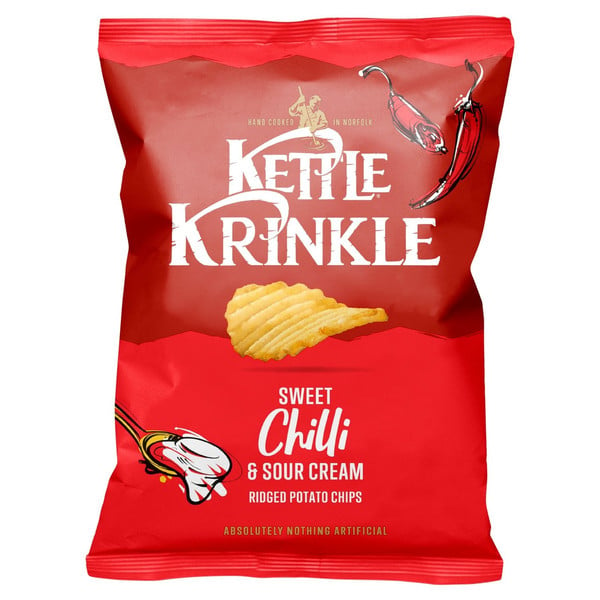
Barbecue, sweet chilli and smoky paprika.
33 in the range
Herby and deli
Sour cream and chive, herbs and the posh bags.
14 in the range
Tangy and umami
Pickled onion, Marmite, ketchup and Worcester sauce.
15 in the range
Variety packs
A box of mixed flavours, so nobody fights over the last one.
22 on the shelf
Nine crisp types
Start with the crunch.
How a crisp is made is what you hear when you bite. The crunch score is ours, from the cut and the cooking: 1 is a soft puff, 5 is a hand cooked bag that bites back.
111 on the shelf
Potato crisps
Thin slices of potato, fried and seasoned while warm. The lunchbox classic.
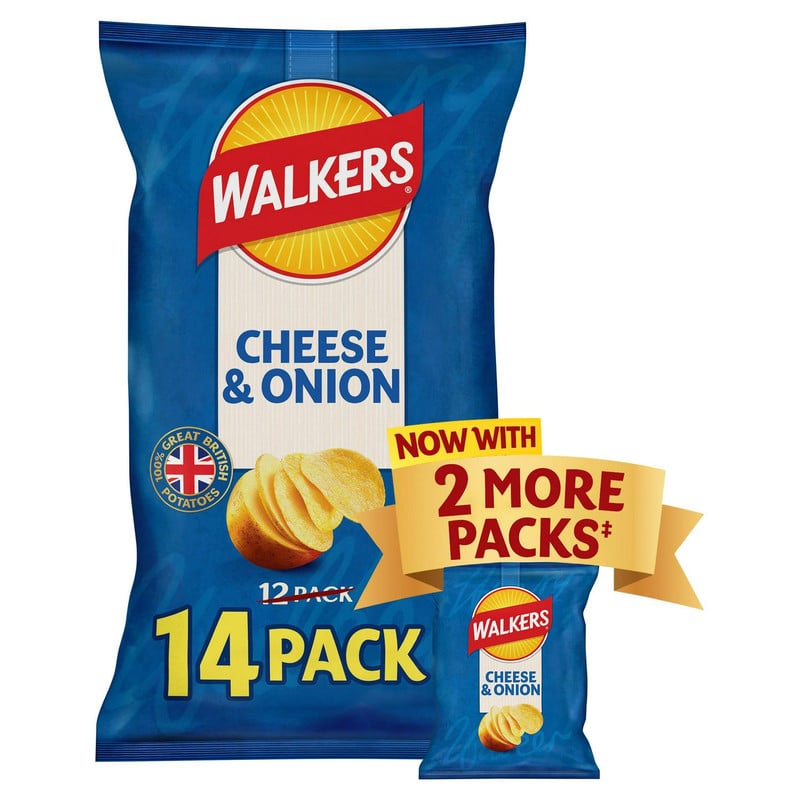
From Walkers, McCoy's, Seabrook and 7 more Crunch3.6 / 5
30 in the range
Hand cooked crisps
Fried in small batches, so the slices cook for longer and bite back harder.
From Kettle, Tyrrells, Burts and 1 more Crunch5.0 / 5
42 on the shelf
Crinkle and ridge cut
A ridged blade makes a thicker slice that holds more seasoning and survives the dip.
From McCoy's, Seabrook, Walkers and 3 more Crunch5.0 / 5
25 in the range
Tortilla chips
Corn dough, rolled thin, cut into triangles and fried. Built for salsa.
From Doritos, Blanco Niño, Kettle and 6 more Crunch4.0 / 5
78 in the range
Puffs, rings and shapes
Dough pushed through a shaped die under heat. It puffs as the steam escapes.
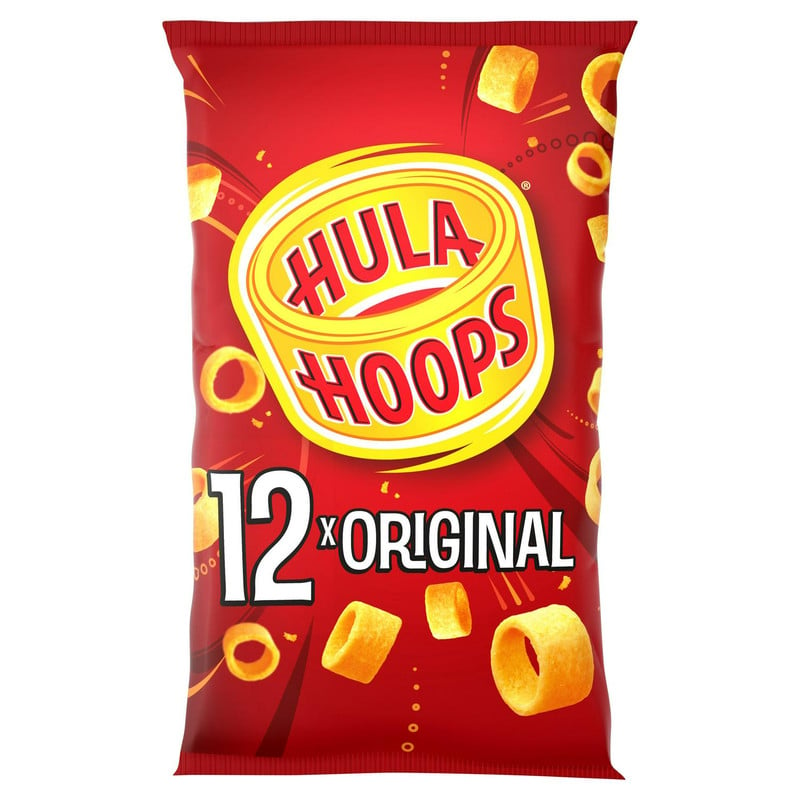
From Walkers, Hula Hoops, Nik Naks and 16 more Crunch2.7 / 5
36 in the range
Popped and baked
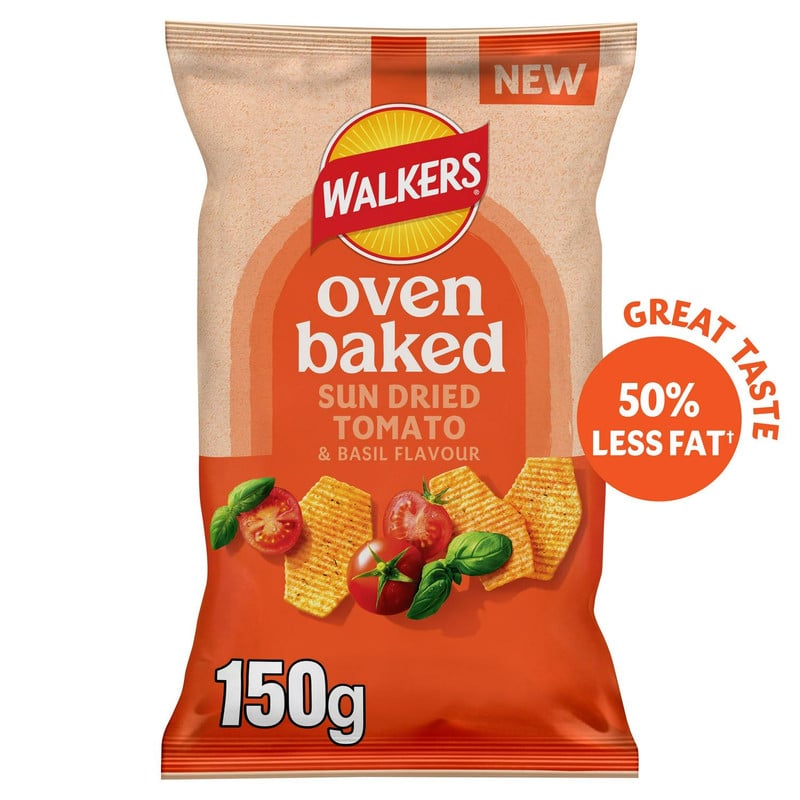
Not fried: baked in an oven or popped with heat and pressure, for a lighter bite.
From Walkers, Popchips, Seabrook and 4 more Crunch2.1 / 5
36 in the range
Lentil, pulse and veg
Lentil, pea or chickpea flour, or sliced vegetables. A denser crunch.
From Proper, Walkers, Eat Real and 5 more Crunch3.8 / 5
20 on the shelf
Stacked crisps
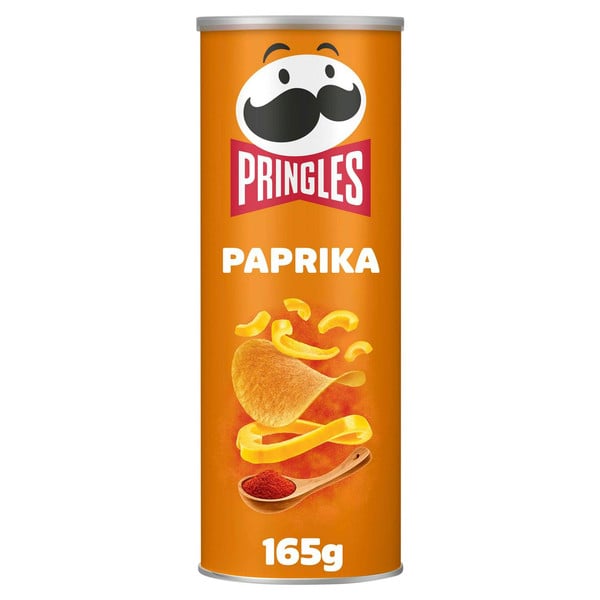
Potato dough cut into matching saddles and stacked in a tube, so they arrive whole.
From Pringles Crunch3.0 / 5
23 in the range
Savoury baked snacks
Baked from a wheat dough, often with real cheese in it.
From Mini Cheddars, Jacob's, Cheez-It and 1 more Crunch4.0 / 5
Crisp picks
Grab a bag, or three.
What is in the bag, from 318 labels
Only 122 of our 318 start as a slice of potato.
The rest begin as potato flakes, corn, wheat, lentils, peas or cassava. Each dot below is one crisp in the range, coloured by the first ingredient on its label.
- 122A slice of potato
- 67Potato flakes, starch or dried potato
- 61Corn
- 36Wheat, oats and other cereals
- 22Lentils, peas, chickpeas and beans
- 7Cassava and tapioca
- 3Not stated on the label
How they are cooked
206give a UK country of origin on the label
298have no palm oil in the ingredients
113say recycle the bag with carrier bags at a large supermarket
Counted from the 318 label records behind the range: the first ingredient, the cooking the label or the name gives, the country of origin, the oils and the recycling line. Where a label does not say, we count it as not stated.
Three questions. One crisp.
Not sure what you are in the mood for? Answer three quick questions and the finder picks the crisps that fit.
Start the finder →- Question 1Which flavour?The one you reach for first.
- Question 2What sort of crunch?Thin and light, or proper hard crunch.
- Question 3What size of bag?One for you, or one for the table.
A short history of the crisp
Two hundred years of crunch.
From a London cookbook in 1817 to a court case about a tube. Every date here is checked, and the source is linked on each card.
- 1817 The first known recipe William Kitchiner's cookbook The Cook's Oracle, published in London, gives a recipe for potatoes fried in slices or shavings. Source: Potato chip
- 1853 A good story, not history The tale of a chef at Saratoga Springs inventing the crisp to annoy a fussy diner is a myth. Historians have found too many holes in it. Source: Potato chip
- 1920 Salt in a twist Frank Smith starts Smiths Potato Crisps and sells them around London in greaseproof bags, with a twist of salt to add yourself. Source: Potato chip
- 1945 Seabrook, Bradford Charles Brook starts making crisps in Bradford. Seabrook still makes them there, mostly from potatoes grown within 50 miles. Source: Seabrook Potato Crisps
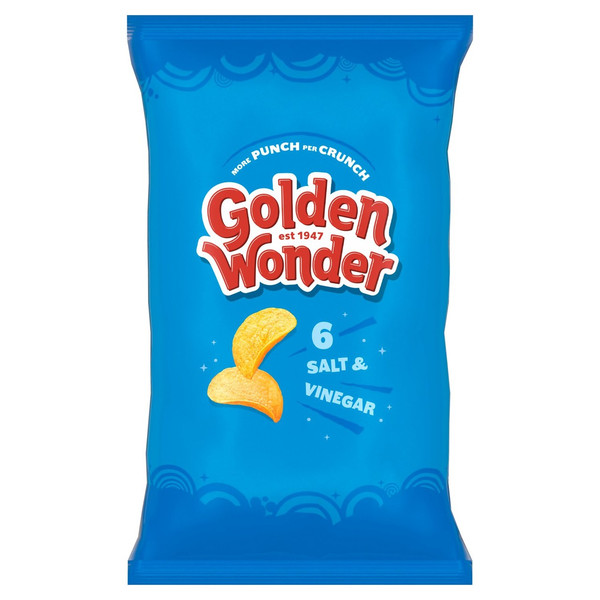
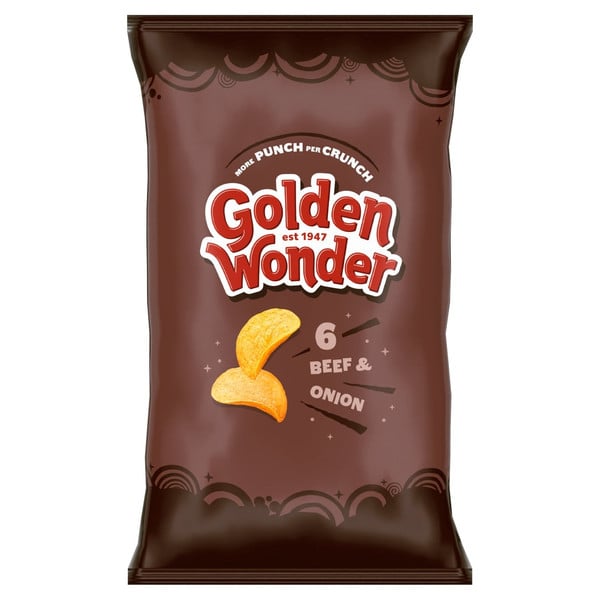
- 1947 Golden Wonder William Alexander founds Golden Wonder near Edinburgh. Source: Golden Wonder
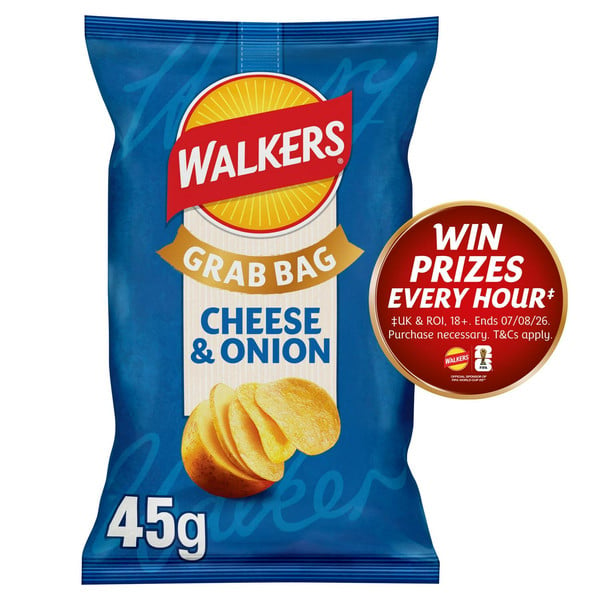
- 1948 A butcher in Leicester With meat still rationed after the war, the Walker family's butcher's shop turns to frying potatoes, and Walkers begins. Source: Walkers
- 1954 Flavour arrives At Tayto in Ireland, Joe "Spud" Murphy and Seamus Burke work out how to season a crisp. The first flavour is cheese and onion. Source: Potato chip
- 1956 The crisp castle Tayto Northern Ireland starts in Tandragee, County Armagh, where the crisps are still made beside Tandragee Castle. Source: Tayto (Northern Ireland)
- 1962 Cheese and onion in Britain Golden Wonder launches cheese and onion crisps in Britain. Source: Golden Wonder
- 1968 Tubes and Quavers Procter and Gamble launches Pringles in America, and Smiths launches Quavers, made from potato starch. Sources: Pringles, Quavers
- 1973 A ring for every finger KP launches Hula Hoops: short, hollow rings of potato and corn. Source: Hula Hoops
- 1977 The Prime Monster Smiths launches a corn snack shaped like a monster's foot, called The Prime Monster. A year later it is renamed Monster Munch. Source: Monster Munch
- 1988 Kettle comes to Norwich Kettle starts making crisps in Britain, in a converted shoe factory in Norwich. Source: Kettle Foods
- 2002 From a Herefordshire farm Farmer William Chase starts Tyrrells at Leominster in Herefordshire. Source: Tyrrells
- 2009 Are Pringles crisps? The Court of Appeal says yes, for VAT, overturning a 2008 High Court ruling that a snack only 42% potato was not a crisp. Source: Pringles
Allergens, diet and ingredients
Read the label, not the packet front.
Every crisp page shows the ingredients with the allergens in bold, what the bag may contain, and the nutrition per 100g and per bag, from the published label for that barcode. Cheesy flavours often contain milk, some seasonings carry wheat or barley, and recipes change, so the pack in your hand has the final word.
251labelled vegetarian
63labelled vegan
89say gluten free
7say halal
30 of 40meaty flavours are labelled vegetarian
Across the 318 labels
- 126contain milk
- 83contain gluten
- 29contain soya
- 157list none of the 14 allergens in their ingredients
- 133may contain soya
- 110may contain gluten
- 100may contain milk
"May contain" is the maker's warning about the kitchen or the factory, not a listed ingredient. If an allergy matters, read the full label on the crisp's page and on the bag.
Crisp talk
Things you did not know.
Five things worth knowing next time crisps come up at the pub. All checked, sources on each card.
Green or blue?
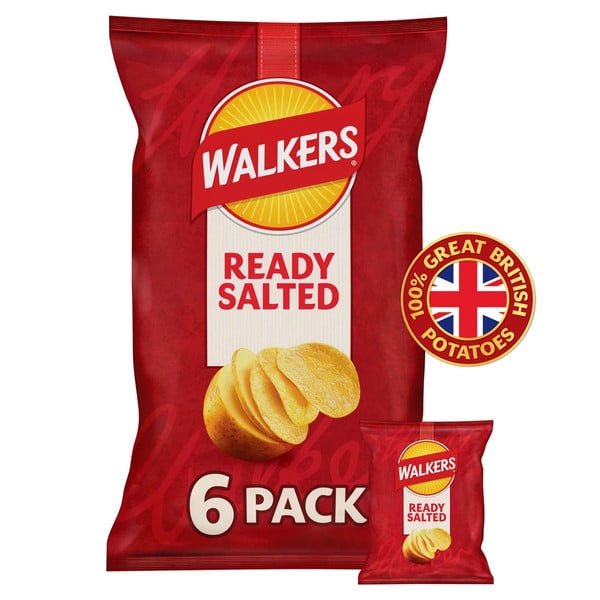
At Walkers, salt and vinegar comes in green and cheese and onion in blue. Most other British makers do it the other way round.
Source: Walkers
Crisp butty or piece and crisps?
Crisps in buttered bread goes by a lot of names: a crisp sarnie, a crisp butty, and in Scotland a piece and crisps. In 2015 a crisp sandwich café opened in Belfast.
Source: Crisp sandwich
Why crisps carry VAT
Most food in the UK is zero rated for VAT. Crisps are on the list of excepted items, so they carry the standard rate like sweets and fizzy drinks.
Source: GOV.UK, VAT Notice 701/14
Crisps or chips?
Crisps in Britain and Ireland, chips in North America, where our chips are fries.
Source: Potato chip
Buried in a tube
Fredric Baur, the chemist behind Pringles, asked to be buried in one of the cans. His family put part of his ashes in one.
Source: Pringles
47 crisp makers in the range
The makers behind the bags.
Walkers 96
Kettle 17
McCoy's 15
Pringles 15
Doritos 13
Proper 12
Tyrrells 12
Hula Hoops 11
Seabrook 11
Golden Wonder 10
Mini Cheddars 10
Jacob's 9
Eat Real 7
Popchips 7
Taylors 7
Nik Naks 6
Pipers 5
Discos 4
Skips 4
Blanco Niño 3
Cheez-It 3
Love Corn 3
Pom-Bear 3
Burts 2
Cheetos 2
Golden Cross 2
Hippeas 2
Kingston's 2
Marmite 2
Real 2
Schär 2
Smiths 2
Torres 2
Well & Truly 2
Capsicana 1
Gran Luchito 1
Graze 1
KP 1
Manomasa 1
Mister Free'd 1
Nairn's 1
Native 1
Old El Paso 1
Roysters 1
Space Raiders 1
The Curators 1
Wheat Crunchies 1
On the shelf now: opens the maker's pageOn the wayThe number is how many of their crisps are in the range. Branded crisps only, never a supermarket own label.
Five ways to buy
One bag or the whole box?
The same crisp often comes in three or four sizes. Every one shows its price per 100g, so the bigger bag has to earn its place.
The desk drawer bag Single bags
One bag, one person: 28g to 50g.
38 on the shelf
Film night Sharing bags
60g to 280g in one bag, for the table.
138 in the range
A week of lunchboxes Multipacks
5 or 6 bags of 12.5g to 30g.
102 on the shelf
The family cupboard Big multipacks
12 to 22 bags in a box, up to 506g in all.
26 in the range
Picnics and parties Tubes and caddies
Stacked in a tube or packed in a tub: 40g to 165g.
20 on the shelf
How the prices work
Every bag, priced per 100g.
A 25g lunchbox bag, a 150g sharing bag and a box of 22 cannot be compared by the price on the front. So every crisp here also shows what 100g costs, and every multipack what one bag works out at: on every crisp page, every shelf and every search.
Price÷grams×100=price per 100g
One flavour, two packs, from the shelf today
- £7.86Sunbites Sweet Chilli Wholegrain Crisps, 28g per 100g
- £2.00Sunbites Sweet Chilli Wholegrain Crisps, 6 x 25g per 100g
For business
Crisps by the box, for business.
Stocking a café, a pub, an office kitchen or a charity event? Or making crisps and want to sell them here? Start with the page that fits.
The crisps.biz Crisp Wiki, being written
The science of the crunch.
Why crisps crunch, how the flavours get on, who fried the first bag, which ones are vegan, and the questions people actually type into search boxes about crisps. Free to read and written by us.
New in the wiki
The first Crisp Wiki stories are being written and will appear here as they go live.
Crisp news and new arrivals
From the newsroomAll news →
Nothing in the newsroom yet. Crisp news goes here when there is some.